Wednesday, March 9, 2011

What the "Shop Local" Movement is Missing


Shop Local! It’s a command I have dutifully followed for a long time. But recently, I have started to think there is something sinister underneath the good it is trying to do. Before my liberal and community-minded friends get made at me, let me set the parameters of my argument.

One. It does not apply to food. We must buy food that is grown as close as possible to where we live. Period. If you want argument on that front, go to another blog.

Two. I used to own a business. An art business. That sold non-locally produced art. It failed. I am not bitter. No one ever owed me a living. Seriously.

Okay. Before I start my argument, I will tell you a story. I went to a local business to purchase a bottle of moisturizer. It was the second time I had been in this business in the past year or so. The first time I was there, I did not like the owner. She was neither helpful or warm. I work hard for my money, and I do not have a lot of it. When I spend it, especially on slightly luxurious things, I like the experience to be a pleasant one. This woman was not pleasant – not rude, just not pleasant. I made my purchase anyway, because it was a local business. I only went back several months later because, well, I needed more moisturizer, and because I saw that this business had become a supporter of a charity I really care about. I was pleased to see the owner in the store when I went in. I picked up my moisturizer and as I was checking out, I told her that I was patronizing her business instead of ordering online or going to Richmond because of her support for my favorite charity. Her response was: “Well, you are supposed to shop locally.” I was stunned.

So this got me thinking. What is my responsibility to my community, to local retailers? Especially when they don’t serve my needs very well? I like to shop locally because I do want my tax dollars going to educate my community’s children and build bike paths. But when the shopping experience is not pleasant, what do I owe those children?

The moisturizer was at least the same price at the shop or on-line. What about when a product is substantially cheaper at Amazon.com? Am I supposed to fork over another $50 so that a local business can afford its rent?

And there we have it. The real problem, the people who are not contributing A DAMN THING to the Shop Local movement? The LANDLORDS who like to charge outrageous rents in a small town. Why don’t they make it easier for businesses to compete by charging more reasonable rent? Why do consumers have to shoulder the burden? I know how hard it is to run a successful business in this small town. I bet the owner of the shop where I bought my moisturizer was unpleasant because she was having a tough time paying her bills. Or she is just a bitch, but I’d like to give her the benefit of the doubt.

The Shop Local movement allows the landlords – many of whom in this town don’t give a damn about their communities – to keep getting richer while I agonize over whether to buy my coffeepot locally or on-line. I’m sick of it. I’m sick of the way liberals buy into this.

I don’t have an answer, but I would really like to see the rich people of this town do a little more than just give money to charity. They should become a part of a larger economic solution.

Thursday, February 17, 2011

Washington, D.C.: Place or Idea?


A current fad in literature is place-based fiction. "Fad" is probably too harsh a word, but the choice of noun efficiently lets you know my opinion.

Sometimes I like reading a book that takes me to a physical place, and it doesn't matter if I have been there or not. The Scottish highlands, Patagonia, New Orleans, Antarctica, Cuba, Paris. There are many wonderful places to go. But places don't make fiction. Ideas do. Feelings do. Dialog and characters do. And, most of all, story makes fiction.

Stories do not have to be tied down to places to be good. Exhibit A: Jose Saramago's The Cave. Exhibit B: Samuel Beckett's Waiting for Godot. These stories could take place anywhere.

Setting is certainly an element of a great story. But setting doesn't have to be a recognizable place. It can be a dining room table. It can be a hospital. It can be a police station. A beach. A factory. A car. A cliff. A mine shaft. Anonymous things on which a story can build itself. A story that touches something universal, something that does not have baggage.

The Wshington Post magazine had a great article last Sunday about Richard Peabody, the publisher of Gargoyle literary magazine. Peabody thinks Washington D.C. is a great literary town. Jonathan Yardley, the Post's book critic, disagrees. The article says: "According to Yardley, Washington's enduring status as a literary backwater derives from the lack of an 'indigenous literary community.' Many of the serious fiction writers living here came from elsewhere, while writers with roots deep enough to produce the kind of stellar place-based fiction that puts a literary community on the map have failed to explore the narrative riches to be found in the lives of ordinary Washingtonians."

That makes my blood boil. Not for the same reasons Peabody is upset, but because, of all places, Washington is a city of ideas. To reduce it to a place is to strip it of what makes it unique. Politics, power, hope, poverty...these things make the landscape of Washington.

If so prominent a figure as Yardley doesn't see this, I am heartsick about the future of the publishing industry.

(The photo is from Obama's inaguration.)

Tuesday, January 18, 2011

First paragraph of new short story....

She was barely conscious when he got back from the bathroom. He had gone to wash his hands in preparation for the injection, as if it mattered whether his hands were clean. She wasn’t going to get an infection. She wasn’t going to live another five minutes. He opened the drawer from Mary’s bedside table and pulled out the box that held the equipment he needed. He tied the rubber tubing halfway up her bicep and filled the syringe from the bottles they had hoarded. They had removed the IVs two weeks ago as the hospice worker instructed, but she hadn’t died. He kissed her. She fluttered her eyelids. Should he wait? Was she trying to say something? The last time she could communicate was over a week ago and she made him promise then to go through with it on her birthday. Her birthday was yesterday. He found a vein, inserted the needle, closed his eyes and pushed the plunger.

Tuesday, December 28, 2010

Michael Vick


I’m wrestling with evil. Not literally – my soul is fine, thank you. But in my work. I find it difficult to create believable evil characters. When I try to touch evil, I fall into caricature. Ugh.

It’s only recently that I’ve recognized that my “bad guys” are lacking evil. So I’ve been thinking a lot about what makes a person or an act evil.

Today, I’ve been listening to Talk of the Nation on NPR. The subject was Michael Vick. The guest was making a persuasive argument for Vick’s rehabilitation. But it was missing a key element in the way it defined Vick’s crimes.

I have heard people argue that men can beat their wives and girlfriends and suffer less hatred than Vick has. I have heard people, like this guest, say that murderers are more easily forgiven. I say yes to both, and I’m okay with that.

Here’s why. I am a dog lover, but I am offended when a woman is compared to a dog. No, what Michael Vick did was akin to killing a child. Dogs and children are helpless; we are their masters, their caretakers. It is particularly heinous to kill that which looks to you as God.

That is evil. I don’t know if Michael Vick is reformed or not. I cannot see into his heart. But his actions were motivated by a different kind of evil than that which propels a person to kill another person who is an equal.

Saturday, December 18, 2010

On Writing Like a Crab


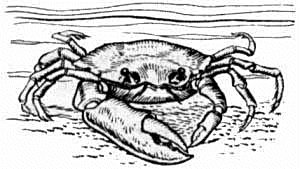
Approaching the computer to put in some time on my fiction should get its own special on National Geographic. I feel I must look like a crab going to war - coming at the thing sideways and quickly, then stopping and posturing aggressively before settling into hand to claw combat with the keyboard. I enjoy it when I get going, and it makes me a better person. But damn, it's hard.

I am lucky to have two on-going freelance jobs right now that I love, that do some good in the world, and that almost pay the bills. So why do I keep writing fiction? I seem to only be able to snatch an hour during the week for it and a few hours on the weekends. And I feel like I am always working.

While in this doubting frame of mind, I came across a few sentences I wrote a while back on why I write. It helped me to read them:

"I’m interested in how people become who they are. How their choices and reactions to events over which they have no control affect their next choices and next reactions. How their mistakes and successes and other people’s mistakes and success form them. And if we are really trapped by our childhoods."

That doesn't sound too shabby. I better get back to it.

I think for work to work, it needs to have a purpose. Otherwise, it just feels like business. It's easy to lose sight of the purpose as we go through the motions of life.

Tuesday, November 23, 2010

Art's Time and Place


When we used to live in Atlanta, Rob had to regularly go out of town for work. Often when he was gone, I would perform radical surgery on something in the yard. Once I climbed up the evergreen in the sloped front yard and started hacking at branches with a saw. I only got a few bruises when I fell.

Now we live in Charlottesville and while the yard still needs plenty of work, I am older and less prone to spontaneous tree pruning. And the saw is a little dull. So the next best thing to occupy my restless self is moving art around. We have so many nail holes in the walls of this house, we probably will have to hang new drywall if we ever want to sell.

Of course, this new habit may be due to the fact we owned an art gallery for three years (the image above is from our gallery) - but wherever it comes from, I like the results. You need to look at different work at different times. Your mood affects what your eyes see. And with winter coming on, I want to be able to see our pieces that reflect the natural world. In the summer, when the natural world is all around, I want artifice, surrealism, weirdness. What I want to see from my couch simply varies with the seasons. Some people are probably more constant (and boring), but I am not.

I think this principle applies in a way to reading as well. Justin Cronin's new book The Passage has been sitting on my bedside table as I have gone through three other books. It's not the right time to tackle his huge adventure story. I've been in the throws of revising my own book, and I want to read books that I can analyze. I want to read The Passage when I can lose myself in it totally and completely, not when I am reading to make my own work better.

Think about where you are pick the art you need to soothe or enliven your soul as the case my be. In other words, it may not be a bad book, just a bad time.

Monday, November 15, 2010

So True

From Michael Chabon: "[F]ailure instructs the writer. Every novel, in the moments before we begin to write it, is potentially the greatest, the most beautiful or thrilling ever written … Our greatest duty as artists and as humans is to pay attention to our failures, to break them down, study the tapes, conduct the postmortem, pore over the findings; to learn from our mistakes."

Reporting for duty!